Fathom - Actions & Triggers in workflows
## 1. Introduction The Fathom integration allows you to automatically access meeting recordings, transcripts, and summaries inside workflows. With this integration, you can: - Fetch meeting transcripts and summaries
- Retrieve recordings data
- Trigger workflows when new recordings are available This helps automate post-meeting workflows like follow-ups, CRM updates, and note processing. ## 2. Available Triggers & Actions ### Triggers These are events in Fathom that can initiate a workflow: - New Recording Triggers when a new meeting recording is available in Fathom.!(https://assets.patientcopilot.ai/068faea492e3558f.jpg) ### Actions These are actions workflows can perform using Fathom: - List Recordings Retrieves a list of available meeting recordings for the connected user
- Fetch Transcript Retrieves the transcript for a selected recording
- Fetch Summary Retrieves the AI-generated summary for a selected recording!(https://assets.patientcopilot.ai/1f5c7d9c3c4dfeda.png)!(https://assets.patientcopilot.ai/af271574bfe8e05b.png) ## 3. Getting Started with Fathom in Workflows ### Add Fathom to a Workflow 1. Open the Workflow Builder
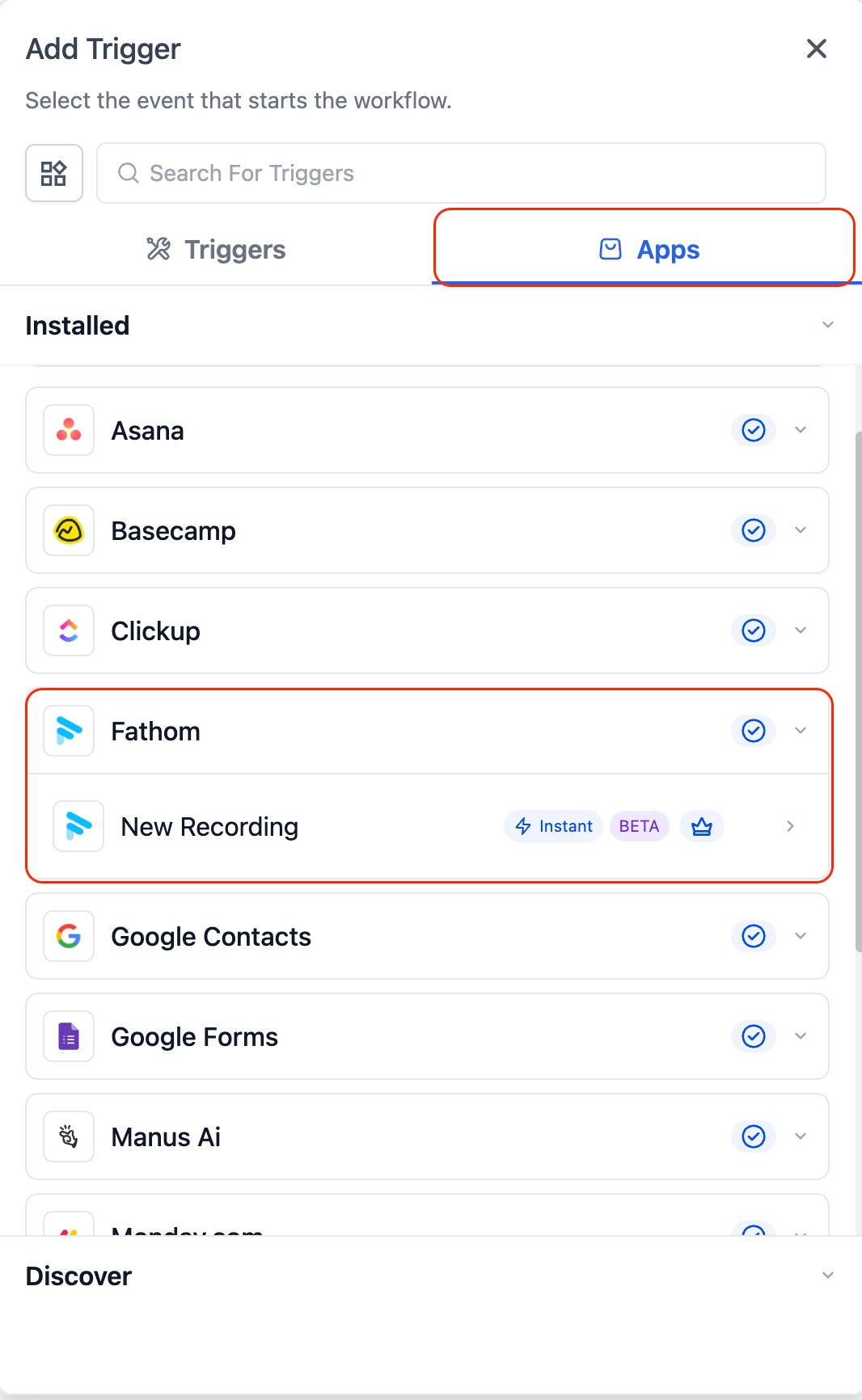
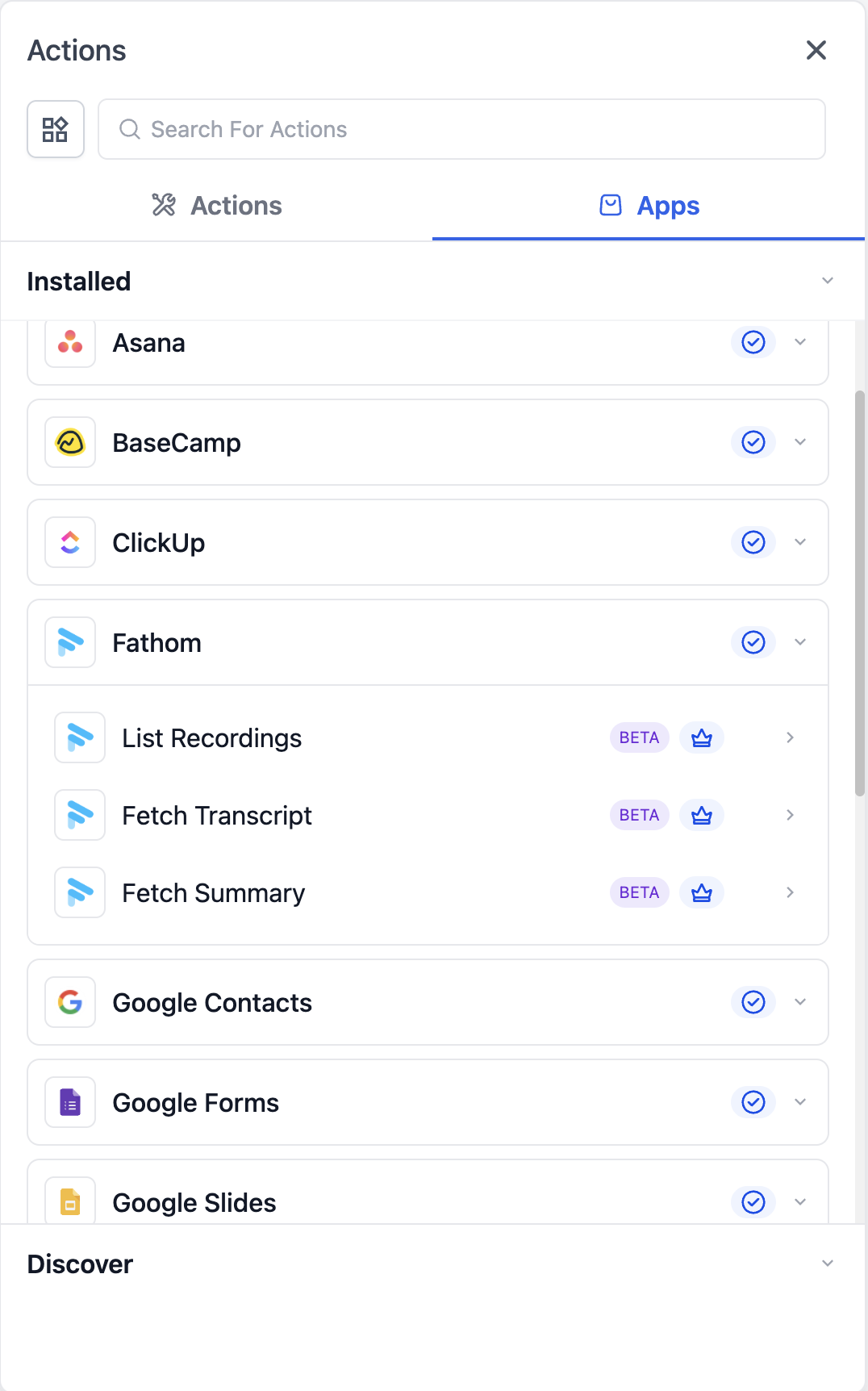!(https://assets.patientcopilot.ai/af271574bfe8e05b.png)
- Search for Fathom
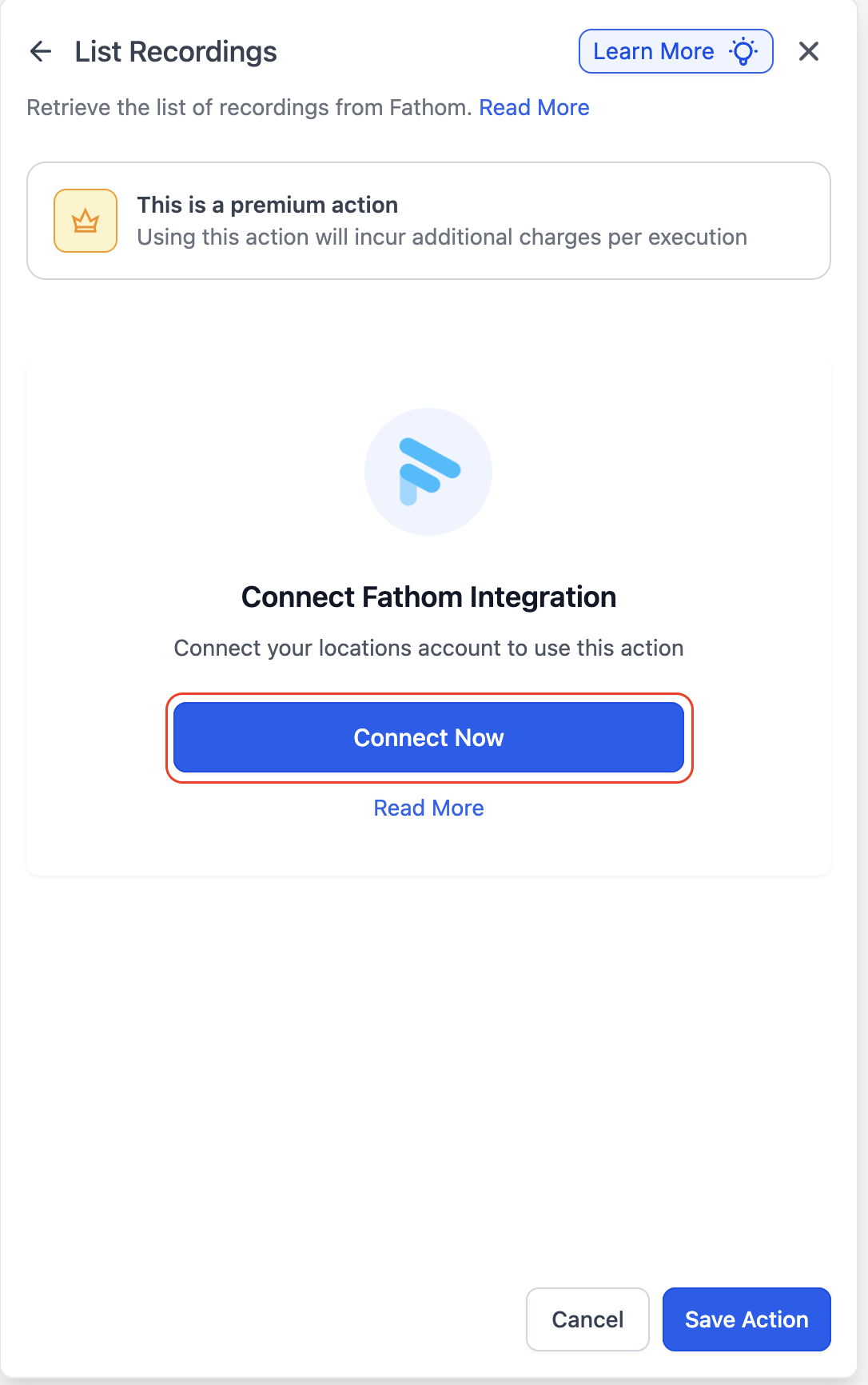
- Select a trigger or action (e.g., New Recording, Fetch Transcript) ### Connect Your Account - If your Fathom account is already connected, configuration options will appear automatically
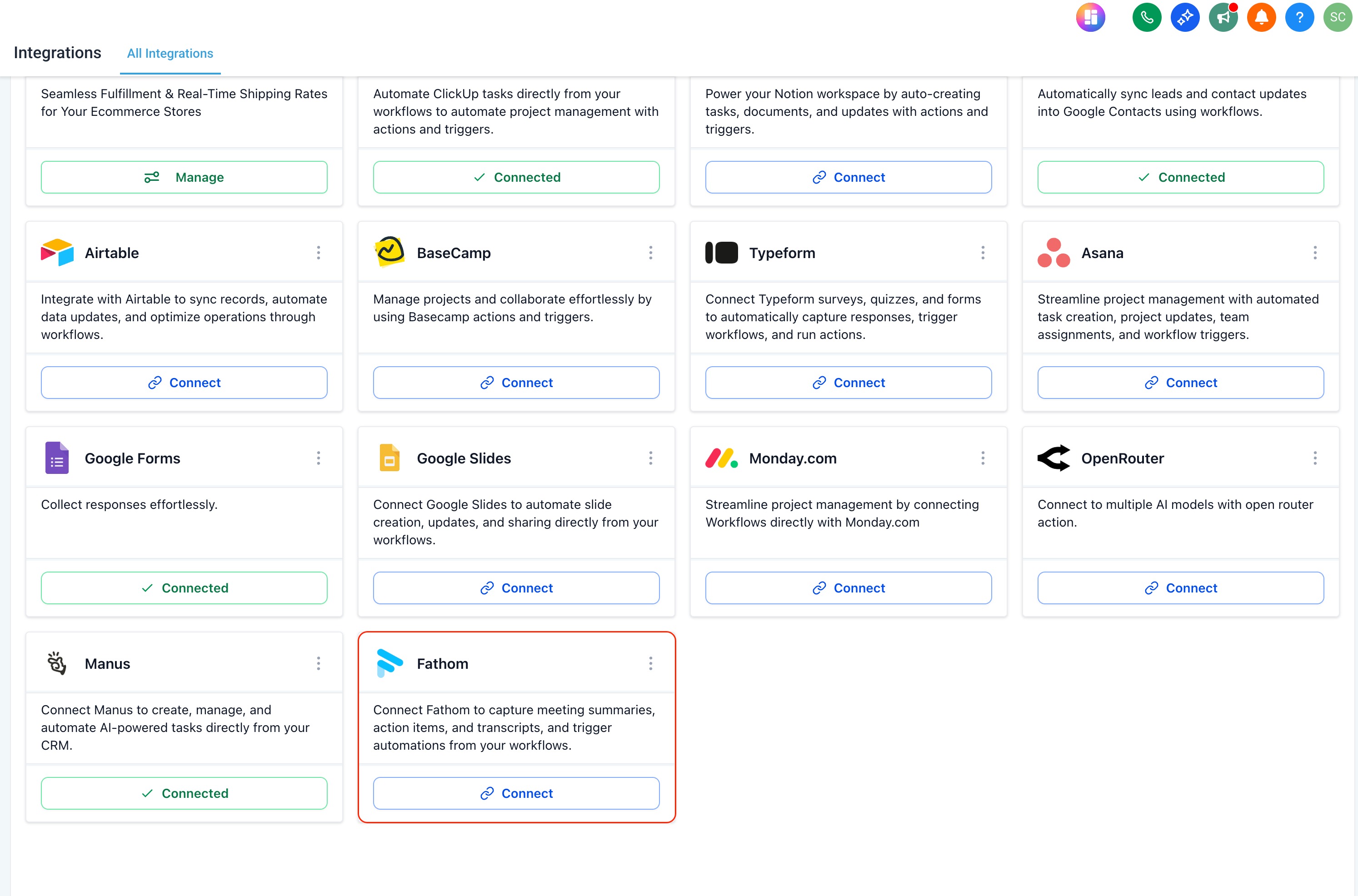
- If not, click Connect Now and sign in using your Fathom login!(https://assets.patientcopilot.ai/da722644c4b56c6a.png) ### Alternative Method 1. Go to Settings → Integrations
- Find Fathom and connect your account Once connected, you can access meeting recordings, transcripts, and summaries inside workflows.!(https://assets.patientcopilot.ai/5d87766f2bae4169.jpg) ## 4. How Do Fathom Triggers Work? - The New Recording trigger fires when a meeting is recorded and processed
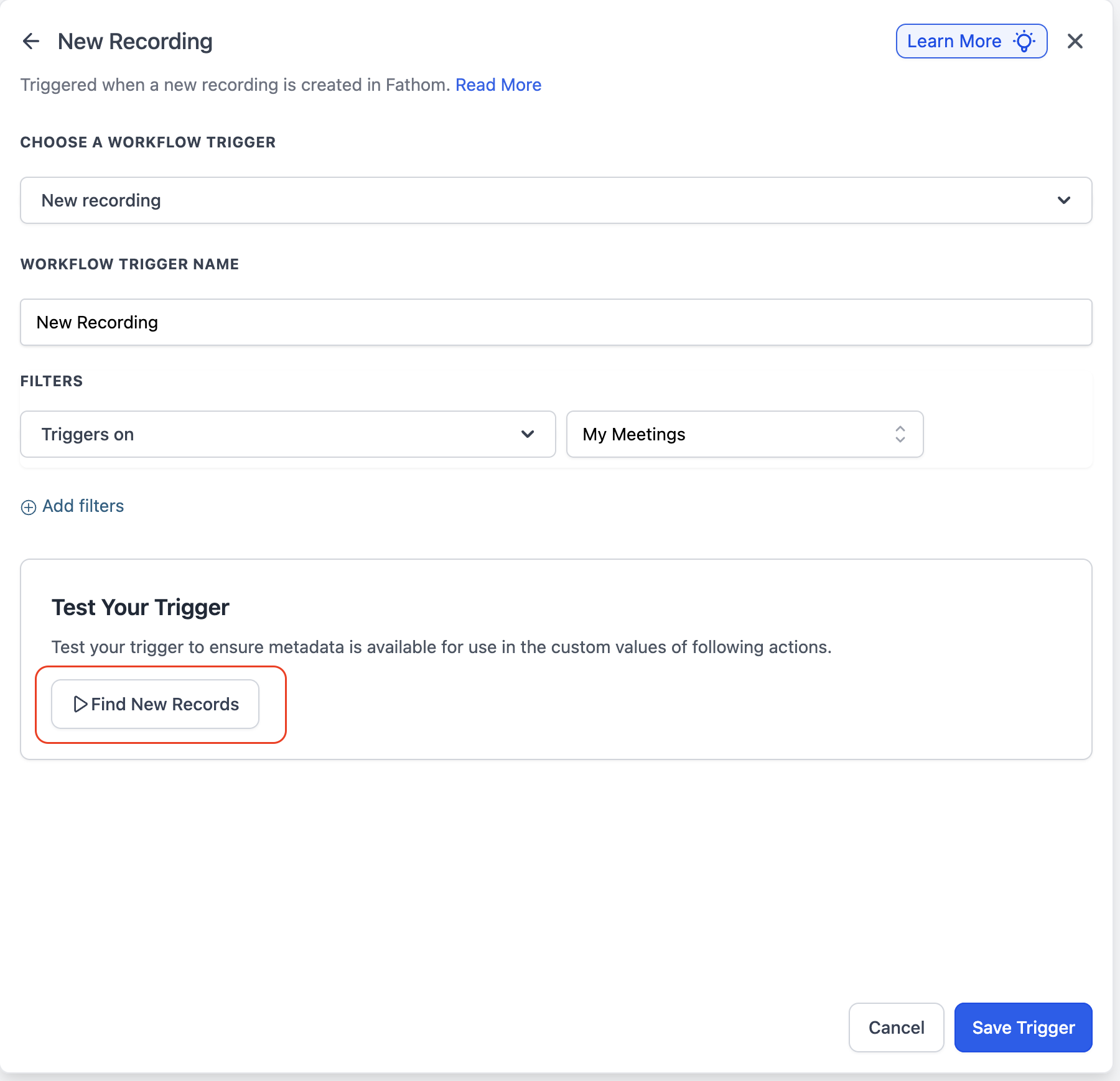
- The trigger includes metadata such as: - Recording ID - Meeting details - Transcript and more
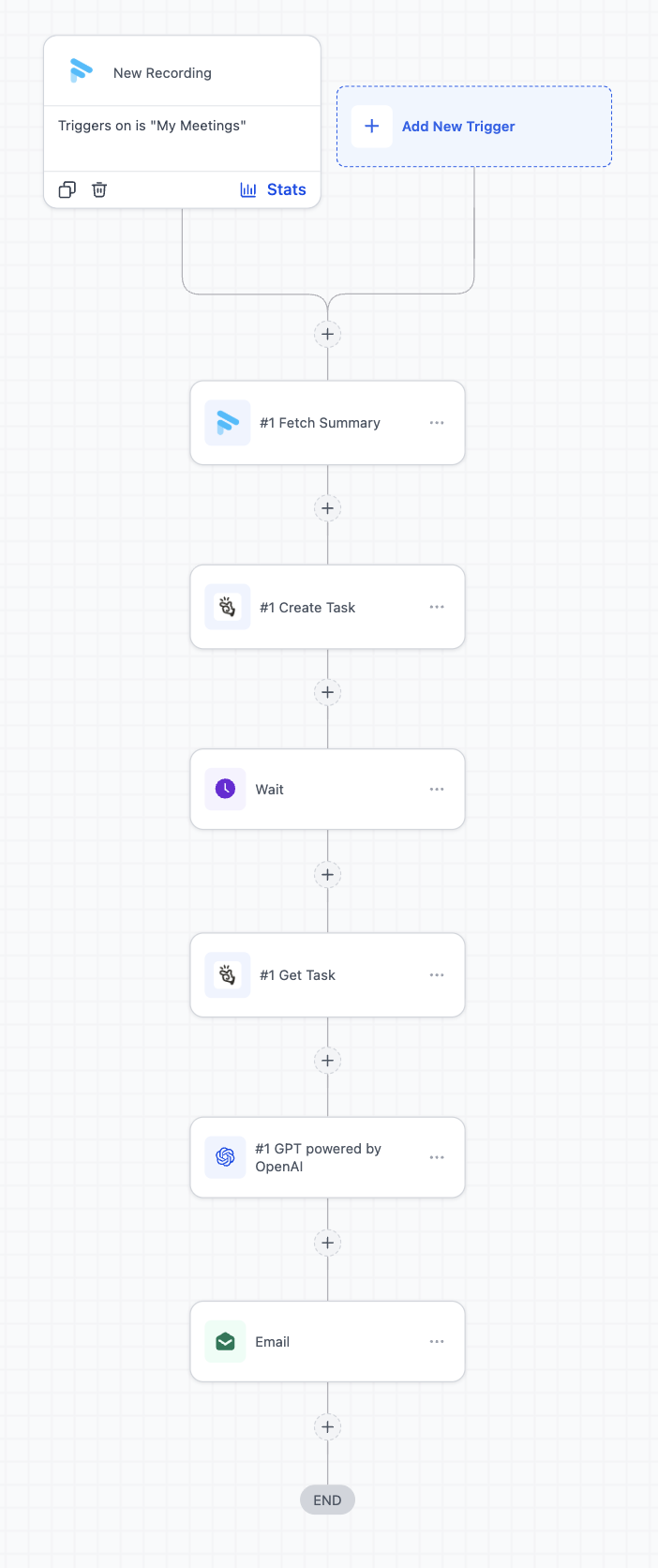
- Use the Test Trigger option to fetch the full schema!(https://assets.patientcopilot.ai/d8ccecf16c9e47db.png)!(https://assets.patientcopilot.ai/87037859f2faf5c5.png) ## 5. Common Use Cases ### 1. AI-Powered Follow-Up Email After Sales Calls (with Competitor Context) Problem: Sales follow-ups are often inconsistent in quality and timing. Emails may lack personalization, fail to reflect the actual conversation, and do not account for competitors mentioned during the call—resulting in weaker positioning and lower conversion rates. Workflow: - Trigger: Fathom – New Recording
- Action: Fetch Transcript
- Action: Manus – Competitor Analysis
- Action: AI ( AI / OpenAI)
- Action: Send Email What happens: - Transcript is analyzed to identify competitors mentioned
- Manus enriches this with competitor insights
- AI generates a personalized follow-up email with strong positioning
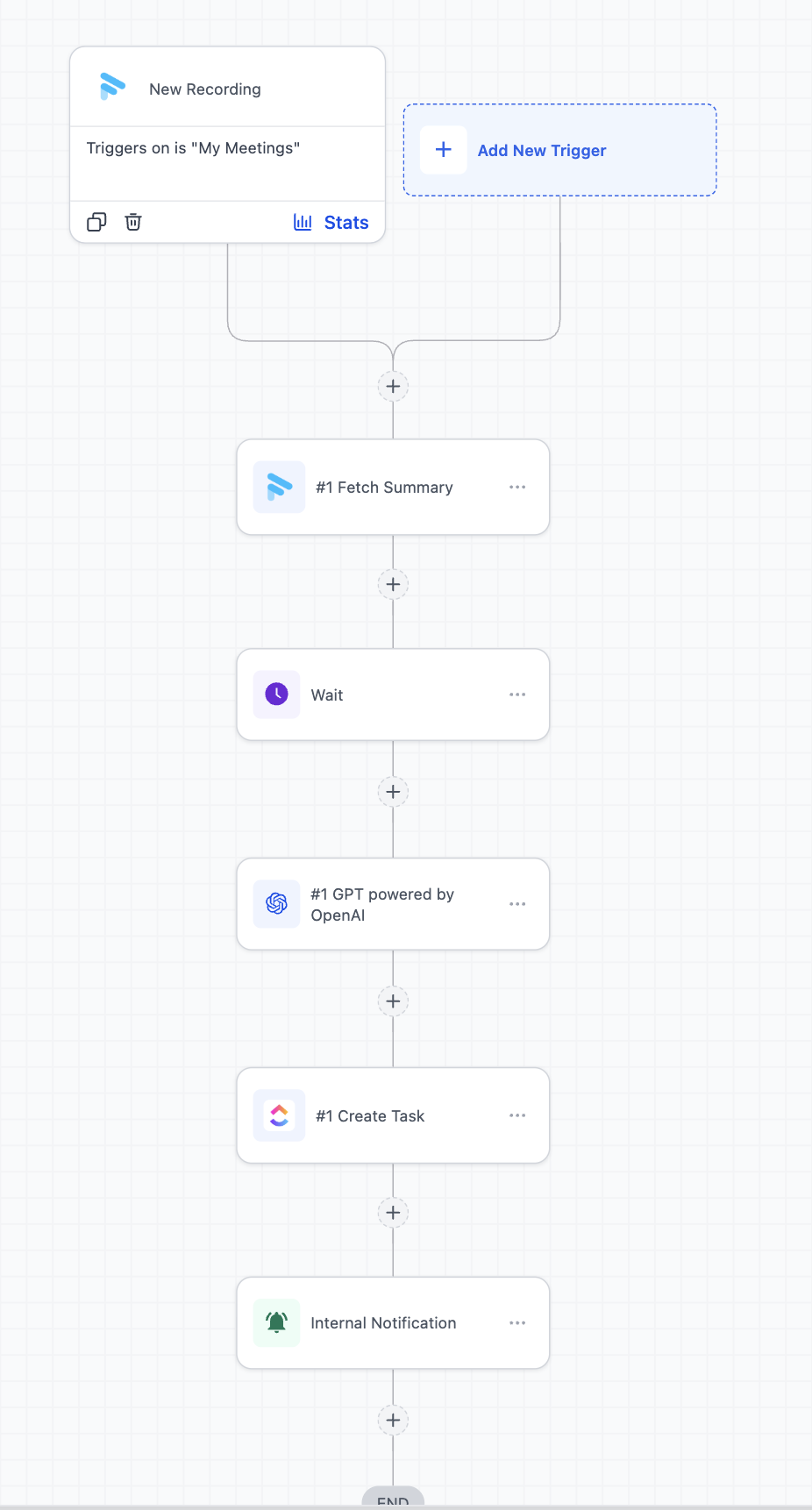
- Email is sent automatically AI Prompt (Follow-Up Email with Competitor Context): AI Prompt (Competitor Extraction & Analysis – Manus): !(https://assets.patientcopilot.ai/137adee40ee8bf19.png) * * * ### 2. Client Call → Auto Summary + Task Assignment Problem: Action items and decisions from client calls are not consistently documented or tracked, leading to missed deliverables, unclear ownership, and inefficient execution. Workflow: - Trigger: Fathom – New Recording
- Action: Fetch Summary
- Action: AI (extract action items)
- Action: Create Task (ClickUp)
- Action: Send Internal Notification (Patient Copilot) What happens: - Meeting summary is generated
- AI extracts structured action items
- Tasks are created in ClickUp
- Internal notification is sent to the team!(https://assets.patientcopilot.ai/6ae2972e7aa52eaf.png) * * * ## 6. FAQs ### 1. When does the “New Recording” trigger fire? The trigger fires after the meeting recording is processed and available in Fathom. This may take a few minutes after the call ends for the summary to be processed. ### 2. Can I map Fathom recordings to contacts in Patient Copilot? Yes, but mapping is not automatic. You can match contacts using participant details (such as email) within your workflow. ### 3. Is Fathom a premium action in workflows? Yes. Fathom actions (such as fetching transcripts, summaries, or recordings) are considered premium workflow actions and will be charged at default rate per execution.
!(https://assets.patientcopilot.ai/87037859f2faf5c5.png)